Level 3 / Rescue Diver
Are you already a Level 2 diver looking to gain the autonomy to undertake deep dives?
The Level 3 course is designed for divers who want to become more independent, explore the island’s deeper wrecks and dive sites, and refine their scuba diving skills.
Key information
Prerequisites
Minimum 18 years old
Medical certificate clearing you to scuba dive (less than 1 year old)
Minimum of 60 logged dives including:
- At least 20 autonomous (unguided) dives to 20 metres
- At least 20 guided/supervised dives at 30–40 metres
Evaluation
Practical: The practical element is evaluated progressively throughout the course.
Theory: In-person classroom dive theory course,Online learning and online multiple choice quiz (80% or higher to pass)
Level 3 / EANx100
800 €
- 10 open water dives
- EANx100 (Enriched Air Nitrox ‑100% O2) course
- Classroom dive theory course
- ANMP PA60 certification
- ANMP EANx100 Certification
Level 3 / EANx100 / Rescue Diver
950 €
- 10 open water dives
- EANx100 course
- CPR/1st aid course
- Classroom Dive theory course
- FFESSM Licence
- PA60 FFESSM Certification
- EANx100 FFESSM Certification
- RIFAP FFESSM (1st aid) Certification
- SDI Rescue Diver Certification
All prices include insurance and all required equipment for the course.
No intensive sport, freediving or altitude (300m+) after diving. And 24 hours between your last dive and flying.
Level 3 Training Course Outline
Mastery of Level 2 skills is essential before embarking on the demanding Level 3 course. You may be asked to complete one or more exploratory and skills-assessment dives to ensure you are well-prepared to begin your diving training with Escapade Plongée.
Upon registration, you will receive an email with access to our online platform, where you will find theoretical content, a section to enter your personal details, and the validation quiz.
You will learn to plan, organize, and execute dives independently while honing your skills in decompression, navigation, and managing the safety of your dive team. Training sessions focus on acquiring technical skills for diving in the 40-meter depth range. You will then progressively apply these skills during deeper exploratory dives, reaching depths of up to 60 meters.
The Level 3 course includes comprehensive theoretical training: the online educational materials are supplemented by an in-person class in our training room, led by one of our instructors.
As safety is at the heart of our instruction, we include the “Advanced Nitrox” qualification (use of oxygen-enriched mixtures up to 100%) in our Level 3 course (provided you already hold the basic Nitrox qualification).
RIFAP
RIFA(P) stands for *Réaction et Intervention Face aux Accidents subaquatiques — spécialité Plongée* (response and intervention for diving accidents — diving specialty). It is required to obtain an FFESSM Level 3. Taught at Escapade Plongée, this dive-specific first-aid course trains you to assist a diver in difficulty on a boat until emergency services arrive.

During the course you will learn to:
- Tow the injured diver and get them out of the water
- Secure the casualty
- Organise and coordinate rescue actions
- Apply the right assistance techniques
- Administer emergency oxygen
- Alert emergency services, take and pass on essential information
RIFAP only: 150 €
Available from Level 1. Price includes training, certification and the FFESSM licence.
This course is included in the FFESSM Level 3 package.
Decompression stop — Advanced Nitrox diver
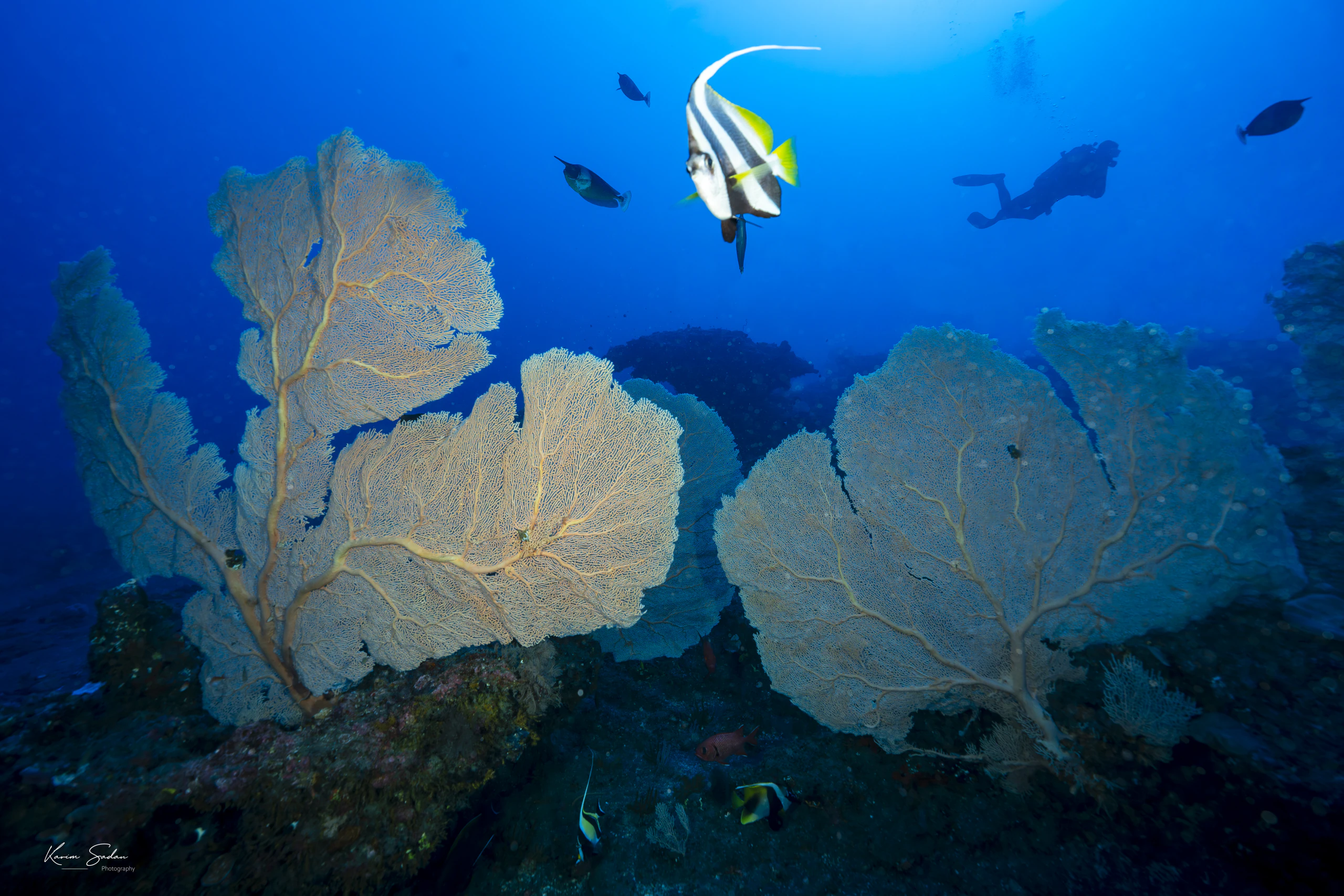
Table coral on Bo Caillou (-60 m)
FAQ
How many dives do I need before starting a Level 3 course?
We recommend at least 60 exploration dives, including 20 autonomous dives at 20 metres and at least 20 guided dives in the 30–40 m zone, so you begin the course with solid experience.
Can I take a Level 3 course during a dive holiday in Reunion Island?
Yes — you can complete Level 3 in Reunion while on holiday. We recommend a stay of at least one month so we can do a few exploratory dives first to assess your level, then the 10 training dives (typically one per day), the theory class and RIFAP. That timeframe leaves room for weather and a steady pace. Also plan for post-dive recommendations: 24 hours without sport, altitude or flying.
Can I do Level 3 if I only dive occasionally?
Yes, but we need strong recent experience in autonomy at 20 metres and guided diving to 40 metres. We adapt case by case. Before any Level 3 enrolment we will dive with you on at least two dives, including one to 40 metres, to assess your skills.