School of fish and reef — Exploration diving

Fun dives in Reunion Island

Dis­cov­er the finest dive sites in Reunion Island with Escapade Plongée. Depart­ing from Saint-Gilles-les-Bains har­bour, explore the west-coast reefs all year round.

Our instruc­tors guide you safe­ly — guid­ed or autonomous, day or night.

Practical information

Our dive sites

From the Trois-Bassins pass to Cap Lahous­saye, many dive sites suit every lev­el: coral reefs of the Reunion Marine Nature Reserve, wrecks, drop-offs and deep sites.

Prerequisites

Hold a scu­ba cer­ti­fi­ca­tion.
Chil­dren can join explo­ration dives from age 8 with a Bronze, Sil­ver or Gold Div­er cer­ti­fi­ca­tion.

Guided exploration

Autonomous exploration

Extras

These rates include gear and third-par­ty lia­bil­i­ty insur­ance.

A med­ical cer­tifi­cate is not required for explo­ration dives, except in case of a known con­traindi­ca­tion.

Reminder: no sport, free­d­iv­ing, alti­tude or fly­ing with­in 24 hours after your dive.

Book your dive now

What is there to see in Reunion Island?

Reunion Island is packed with varied underwater landscapes rich in life.
Sea turtles (green and hawksbill) are regularly seen, and you may meet many rays: black-spotted stingrays, ocellated eagle rays, whiprays or torpedo rays.
Some areas are rich in anemones hosting Mauritius clownfish and porcelain crabs.
Whether you love the big stuff or the tiny critters, you’ll find something to enjoy!

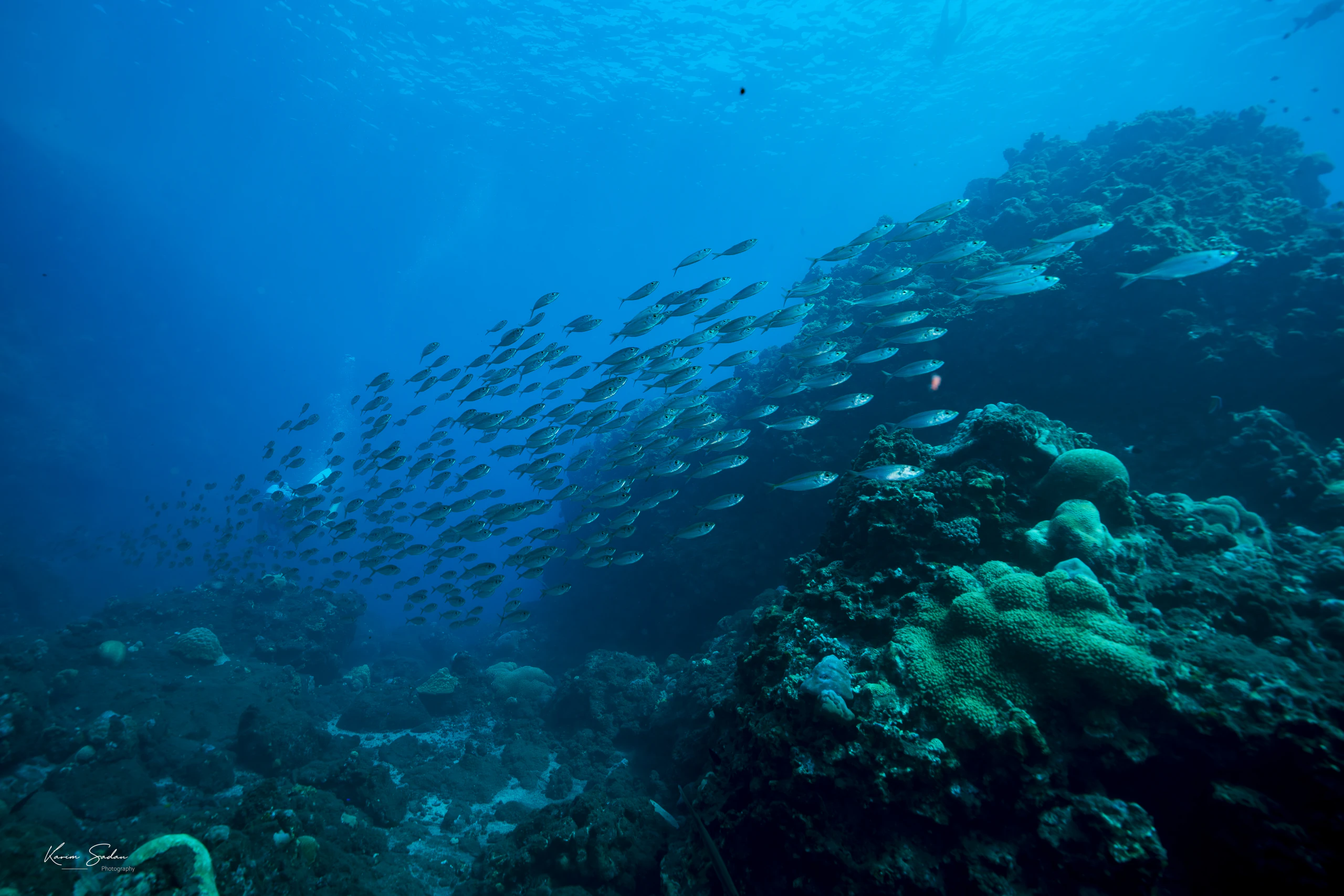
School of bigeye trevally at Cap Lahoussaye

Psychedelic nudibranch

Yellow-spotted moray and cleaner shrimp

Barracuda

Deep dives

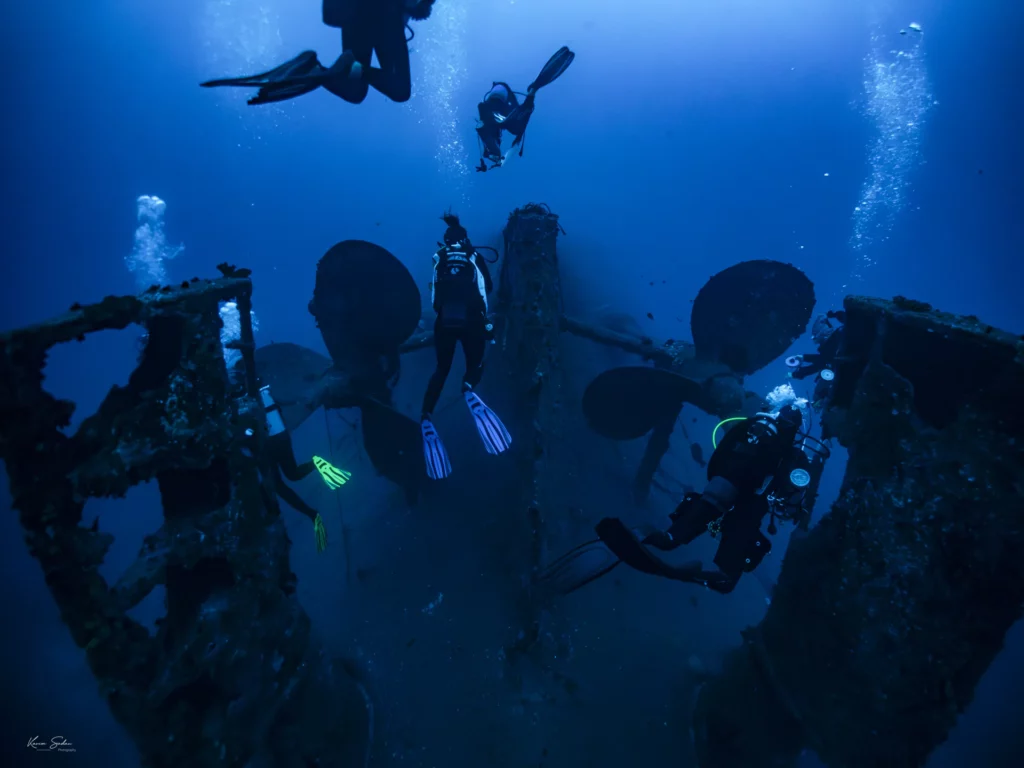
Every weekend, and regularly on weekdays, Escapade Plongée runs trips for divers who want to explore seamounts, wrecks and deep sites (down to 60 metres) on Reunion’s west coast.

Fan gorgonians at Vallée des mérous (40–45 m)

Pineapple grouper at Cary’smile (38 m)

Wreck dives

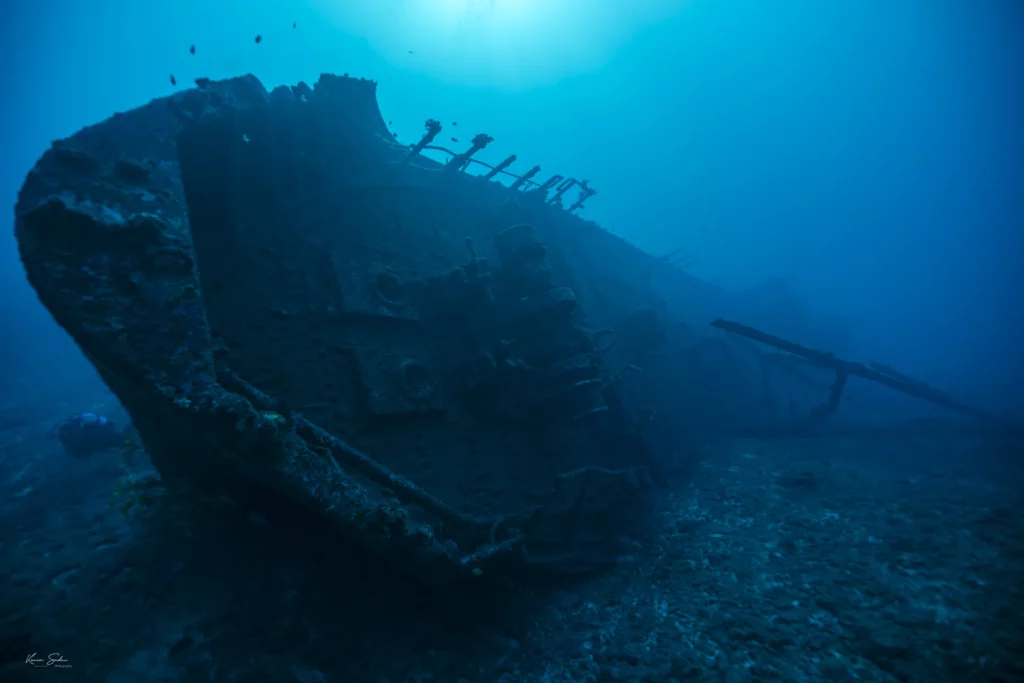
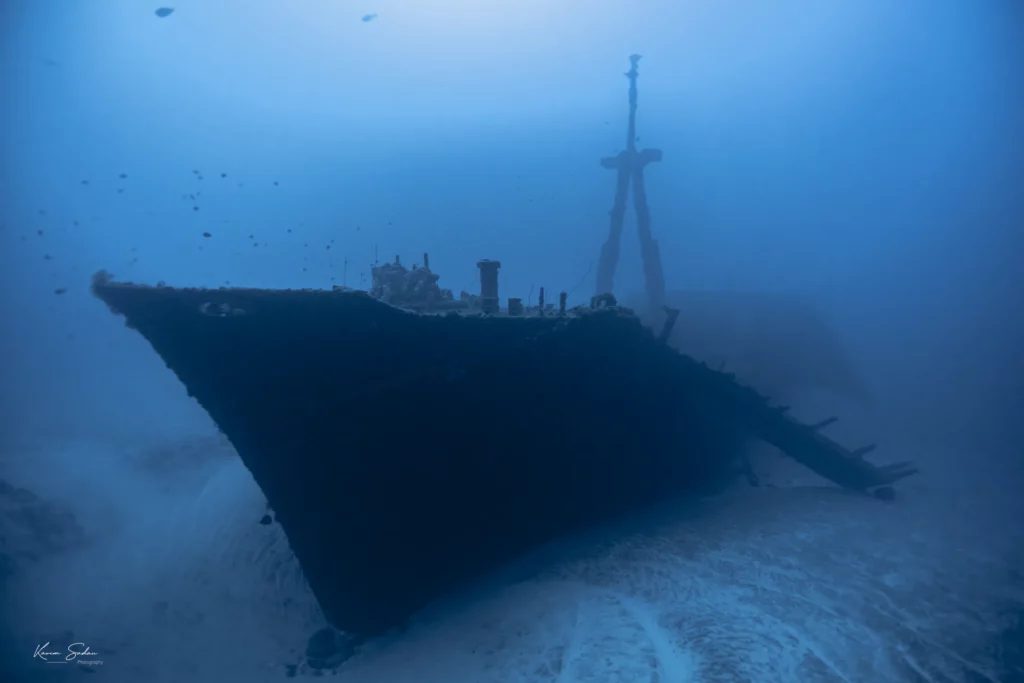
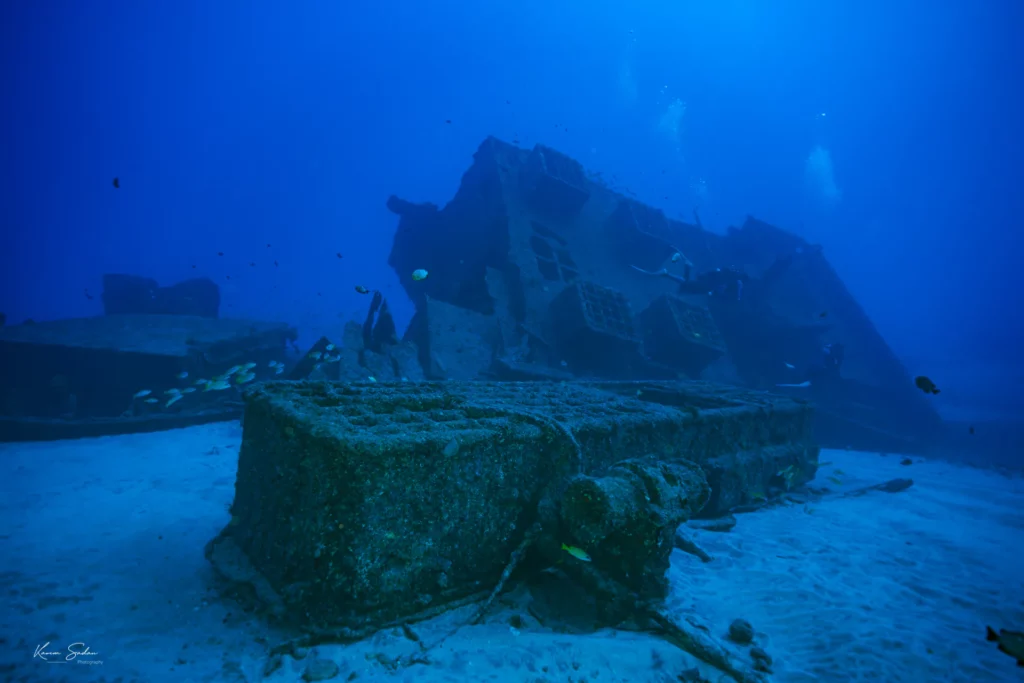
The west coast shelters wrecks whose structures are still clearly visible — a privileged habitat for fish, moray eels and snapper schools.

Night dives

From about Octo­ber to June, night dives run on week­day evenings.
Night dives reveal anoth­er side of Reunion’s reefs: hunt­ing morays, squid in mid-water and active scor­pi­onfish… plus lob­sters, par­rot­fish in their mucus bub­bles or the huge Span­ish dancer, a flam­boy­ant nudi­branch! We pro­vide a torch on top of the usu­al gear.
Open from Lev­el 1 / Open Water, pro­vid­ed you have logged sev­er­al explo­ration dives since train­ing and have dived with­in the last 6 months.

Reef at night

Reef squid

Skills refresh dive

Need a refresh­er or to rebuild con­fi­dence after a long break?

Tai­lored to you: gear, breath­ing and buoy­an­cy, mask clear­ing or reg­u­la­tor recov­ery, what to do in an out-of-air or sep­a­rat­ed-bud­dy sit­u­a­tion — your instruc­tor con­sol­i­dates your skills so you can dive safe­ly again.

Marine biology dive

Escapade Plongée has two instruc­tors with a Master’s in marine biol­o­gy. With our oth­er trained guides, they run Wednes­days and Sat­ur­days focused on observ­ing and under­stand­ing the under­wa­ter world. Species ID, habi­tats, inter­ac­tions — you take an active role with ID sheets and a water­proof slate; themes change each time.

Open from Lev­el 1, at the usu­al explo­ration rate.

Book your dive now

Species identification

Porcelain crab under its anemone

Frequently asked questions

Will I see sharks on my dive?

Whether you hope to see them or they make you uneasy, sight­ings are extreme­ly rare on our coasts while scu­ba div­ing.

I haven’t dived in a long time — which dive should I book?

If you feel com­fort­able and just want a fuller brief­ing, book a guid­ed explo­ration and tell us the date of your last dive. If you feel anx­ious and need more per­son­al sup­port, book the skills refresh dive.

I’m Level 1 — can I join a night dive?

Yes — night dives are open from Lev­el 1 / Open Water. To enjoy them ful­ly, we ask for explo­ration expe­ri­ence (out­side train­ing) includ­ing a dive with­in the last 6 months. For divers we don’t know yet, a first day­time dive may be offered. Get in touch — we adapt to each pro­file.

Are there prerequisites for deep dives?

Yes — before some deep dives, a first guid­ed immer­sion in the 0–20 m range may be required. It helps us get to know you and keep you safe.

Contact us

For­mu­laire con­tact